 EN

Magnetic Whiteboards for Offices
Please tell us about your company's advantages and characteristics.
2026/10/12
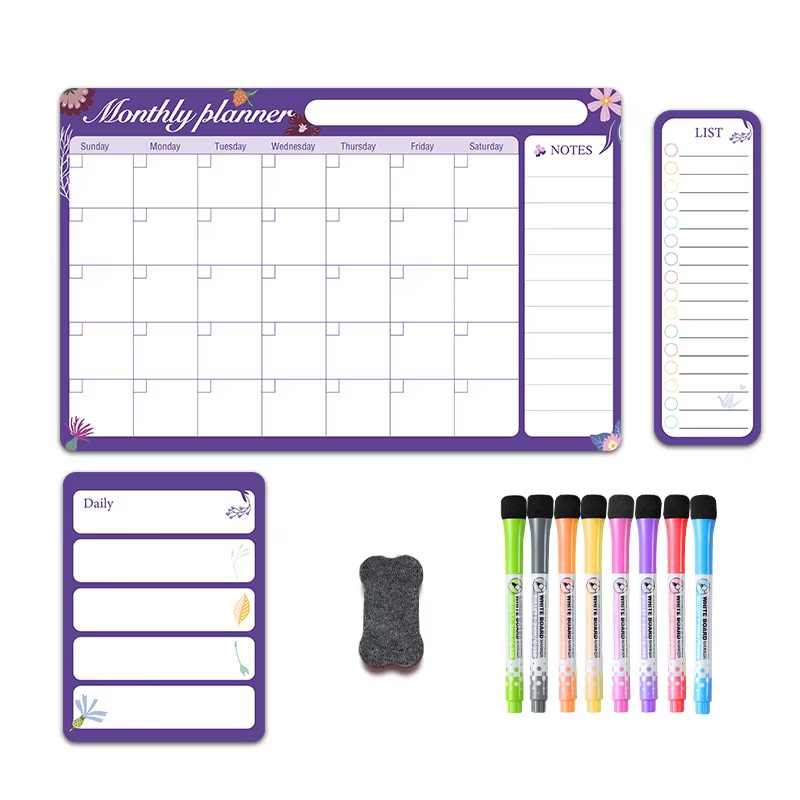
A magnetic chore chart can turn the vague reminder of “please help out” into a routine children can see and take part in. Instead of asking a parent to remember every task, a child moves a card, checks a box, or writes on a reusable surface. The point is not to make home feel like a workplace. It is to make shared responsibilities clearer, calmer, and easier to discuss.
For many families, the most useful magnetic chore chart is the one that matches real life: a few age-appropriate jobs, a predictable place on the fridge or wall, and a short weekly check-in. That simplicity matters more than a long list of tasks or a complicated reward scheme.
Young children often respond better to a visible cue than to a spoken instruction repeated from another room. A magnetic chore chart gives a task a home: “feed the pet,” “put shoes away,” or “help set the table” can be represented by a picture, word, or color. Moving a magnet from “to do” to “done” also makes progress concrete without requiring constant adult prompting.
That is consistent with general guidance on visual supports: pictures and simple schedules can help children understand what comes next in a routine. A magnetic chore chart is not a behavior cure, and it will not remove the need for patient teaching. It can, however, reduce confusion by showing one manageable expectation at a time.
There is a family benefit too. When everyone can see the plan, a missed task becomes a conversation about the system rather than a personal accusation. Parents can adjust the board when school, sports, guests, or illness change the week.
A tile-based magnetic chore chart is especially useful when tasks change often. Children can choose from a small set of picture cards, and a parent can remove jobs that are no longer relevant. This format works well for early readers and for families who want a tactile “finished” action.
A dry-erase magnetic chore chart is useful when names, appointments, and tasks change from week to week. It can suit older children who want more ownership over their own lists. Leave enough empty space to avoid cramming every minute of the day onto the board.
In a color-card magnetic chore chart, each child can have a color while task type has a separate symbol. The distinction is useful in shared rooms or busy families, but keep the code simple. If a child needs to ask what every color means, the design is doing too much.
A useful magnetic chore chart starts with what a child can safely practice, not with the biggest jobs adults wish to delegate. Pediatric family guidance commonly suggests beginning with small household contributions and increasing responsibility as skills grow. Ability, supervision, and the child’s confidence all matter.
Start with two or three dependable tasks. A board full of ten new duties can feel like a punishment, especially in the first week. Add complexity only after the routine feels familiar.
A magnetic chore chart can include a reward column, but rewards do not need to be money or a prize for every task. Some families use points toward choosing a movie, picking a weekend breakfast, or getting first choice of a family activity. Others keep ordinary household contributions separate from rewards and use the chart only for visibility.
Either approach can be workable if expectations are clear. Avoid raising the reward every time interest drops; first check whether the task is too difficult, too vague, or simply no longer appropriate. Praise concrete behavior—“you put the dishes away without being asked twice”—rather than offering a broad label such as “good kid.”
The same visual logic can extend beyond the kitchen. A large magnetic calendar for classroom may help teachers display routines or rotating jobs, while a family-oriented magnetic chore chart typically needs a smaller, more personal layout. The audience changes the design: a classroom board needs distance readability; a home board needs task ownership and easy updates.
For B2B buyers, a customized magnetic chore chart is more useful when the printing choices support the intended routine. Ask whether the buyer needs reusable name cards, wipe-clean areas, child-friendly icons, packaging for gift retail, or a space for a brand message. Custom magnetic notepads can complement a planning kit for grocery notes or reminders, but they are not a substitute for a visible task board. Likewise, a glass marker board magnetic may suit an adult planning space only if its mounting surface and markers are appropriate for the setting.
Families that enjoy hands-on visual learning may also browse magnetic tangram learning materials. The product link is offered as a related magnetic learning resource, not as a claim that it replaces a chore system.
A successful magnetic chore chart does not require flawless handwriting, expensive accessories, or a task for every hour. It needs visible expectations, reasonable jobs, and a routine for reviewing what worked. Start small, invite children to help choose the cards or colors, and revise the board as their abilities change. Over time, the chart can become less about checking off chores and more about making family responsibilities feel shared and manageable.

2026/08/20
Unlock flexible, repositionable whiteboarding for education, agile offices, retail, healthcare & more. Cuttable, magnetic, certified — request your free B2B sample today.

2026/10/10
Discover the 2027 Texture Magnetic Collection & Exclusive Exhibition Promotions Dear Global Partners and Valued Clients, We are thrilled to announce that Shenzhen U&U Magnetic Technology Co., Ltd. (Brand: UCMD) will be officially exhibiting...

2026/08/19
Discover how UCMD® leverages the Canton Fair to showcase magnetic educational & lifestyle products, build global buyer trust, and drive OEM/ODM partnerships. Explore our certified, customizable solutions today.

2026/08/28
Our Commitment to People, Planet & IntegrityAt ShenZhen U&U Magnetic Technology Co., Ltd. (UCMD®), we believe that how we make our products matters as much as what we make. From our factory floor in Shenzhen's Bao An District to the hands...

Please tell us about your company's advantages and characteristics.

Please tell us about your company's advantages and characteristics.

Please tell us about your company's advantages and characteristics.

Please tell us about your company's advantages and characteristics.

Please tell us about your company's advantages and characteristics.

Please tell us about your company's advantages and characteristics.

