 EN

Magnetic Whiteboards for Offices
Please tell us about your company's advantages and characteristics.
2026/10/14
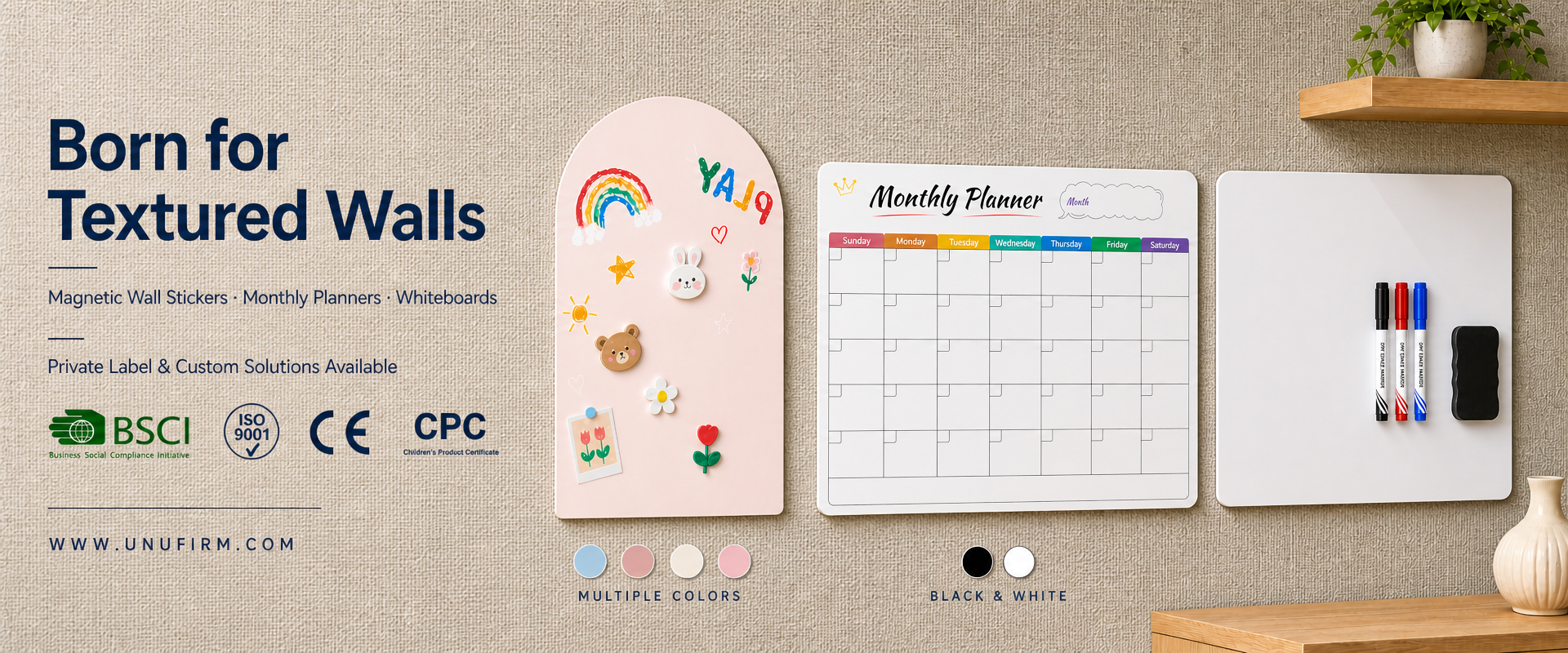
A soft whiteboard is a flexible, writable surface designed for situations where a conventional framed board feels too permanent, too heavy, or simply the wrong shape. Depending on the construction, it may be a dry-erase film, a flexible magnetic sheet with a writable face, or a lightweight self-adhesive board. That flexibility makes it useful for temporary planning walls, children’s rooms, rental spaces, classroom activity zones, and retail displays.
As a magnetic-materials adviser, I recommend starting with the installation surface and the job the board must do. A board that needs to hold magnetic cards is not the same product as a write-on film applied to a smooth wall. Making that distinction early prevents expensive surprises after installation.
Rigid boards normally use a frame, firm backing, and fixed mounting points. A soft whiteboard can bend, roll, or be trimmed. Its writable face may use PET or another dry-erase-compatible film, with adhesive, magnetic, or flexible backing. It is therefore useful where drilling or a fixed size is impractical.
Flexible magnetic material commonly combines magnetic material with rubber in continuous sheet or strip formats. This is why a magnetic whiteboard roll can be cut for a cabinet, refrigerator, or steel display area. Not every soft board is magnetic: some are adhesive films, while others need a magnetic-receptive surface behind them.
These adhere to a ferrous cabinet, locker, or refrigerator and can be removed or repositioned. Confirm that the destination surface is magnetic; aluminum and some stainless-steel surfaces are not suitable.
Adhesive film creates a write-on area on a smooth, clean, compatible surface. It can suit rented offices and temporary project zones, but dust, texture, loose paint, and uneven walls can affect results.
A magnetic whiteboard roll suits custom-length projects. Market examples vary in thickness and roll length, so confirm writable-face construction, backing, cutting tolerance, packaging, and intended application with the supplier.

| Decision point | Soft whiteboard | Rigid whiteboard |
|---|---|---|
| Installation | Often adhesive, magnetic, or lightweight | Usually wall-mounted with hardware |
| Shape and size | Can be trimmed or supplied in rolls for many projects | Usually fixed standard dimensions |
| Portability | Easy to move or store when designed for removal | Better suited to a permanent location |
| Magnetic function | Depends on whether the board is magnetic or mounted to steel | Depends on the board’s steel writing surface |
| Typical fit | Temporary displays, custom zones, movable planning | High-use meeting rooms and permanent teaching areas |
The appropriate option depends on use, not on a universal winner. For example, an office that writes all day on one large board may prefer the stability of a rigid panel. A classroom creating temporary learning stations, or a home office testing a planning layout, may value the adaptability of a soft whiteboard instead.
A magnetic writing board is particularly useful when the workflow involves both notes and movable visual pieces. Cards, labels, and magnetic accessories can be rearranged without rewriting the whole layout. Buyers should still match magnet strength and board construction to the weight of the items being displayed.

Education suppliers, stationery buyers, and independent retailers often need more than a blank board. They may need a particular size, printed planning layout, private-label packaging, or a format that reduces shipping volume. Flexible products can make those conversations easier because a roll or thin sheet may be packaged differently from a framed board. The trade-off is that the buyer must define the installation method, surface performance, and packing protection clearly.
For a starting point, review a customizable soft magnetic whiteboard for a flexible-board format, or consider a rolling dry-erase board material when a roll-based concept better fits the project. Product suitability should be confirmed against the required application and surface; a product title alone is not a complete technical specification.
When a buyer asks for a soft whiteboard, the useful follow-up questions are about location, mounting, and interaction. A soft whiteboard for a refrigerator may need a flexible magnetic backing. A soft whiteboard for a rented study room may need an adhesive-backed dry-erase film. A soft whiteboard for a school project may need a printed grid, rounded edges, and a size that fits a specific activity area.
For longer panels, a magnetic whiteboard roll can simplify custom-length planning, but the buyer should establish whether the magnetic whiteboard roll needs to cling to metal, accept magnets on its face, or both. A magnetic whiteboard roll is also not a shortcut around surface testing: roll material still needs a flat, clean, appropriate destination surface and an agreed cutting method.
A magnetic wall mounted dry erase board is a different request from a removable sheet. In procurement discussions, describe whether the magnetic wall mounted dry erase board must be permanently fixed, whether it needs a rigid backing, and how frequently it will be written on. That distinction helps a supplier compare a framed magnetic wall mounted dry erase board with flexible alternatives without assuming that one construction suits every job.
For distributors, the commercial value of a soft whiteboard often comes from format flexibility rather than a single feature. A soft whiteboard can be offered in a custom size, a themed printed layout, or a compact pack. A magnetic whiteboard roll can reduce the need to stock every finished length, while a magnetic wall mounted dry erase board may fit customers who prefer a conventional, fixed display. The right catalog can include both categories with clear usage notes.
It can if the product has a magnetic-receptive or steel-backed face designed for magnets. A flexible sheet that sticks to a refrigerator is not automatically designed to hold magnets on its writing side, so confirm the direction and purpose of its magnetic function.
Many flexible sheet and roll formats are intended for custom sizing, but the method and allowable tolerance depend on the material. Request cutting and edge-handling guidance from the supplier before installation.

2026/08/20
Unlock flexible, repositionable whiteboarding for education, agile offices, retail, healthcare & more. Cuttable, magnetic, certified — request your free B2B sample today.

2026/10/10
Discover the 2027 Texture Magnetic Collection & Exclusive Exhibition Promotions Dear Global Partners and Valued Clients, We are thrilled to announce that Shenzhen U&U Magnetic Technology Co., Ltd. (Brand: UCMD) will be officially exhibiting...
2026/08/19
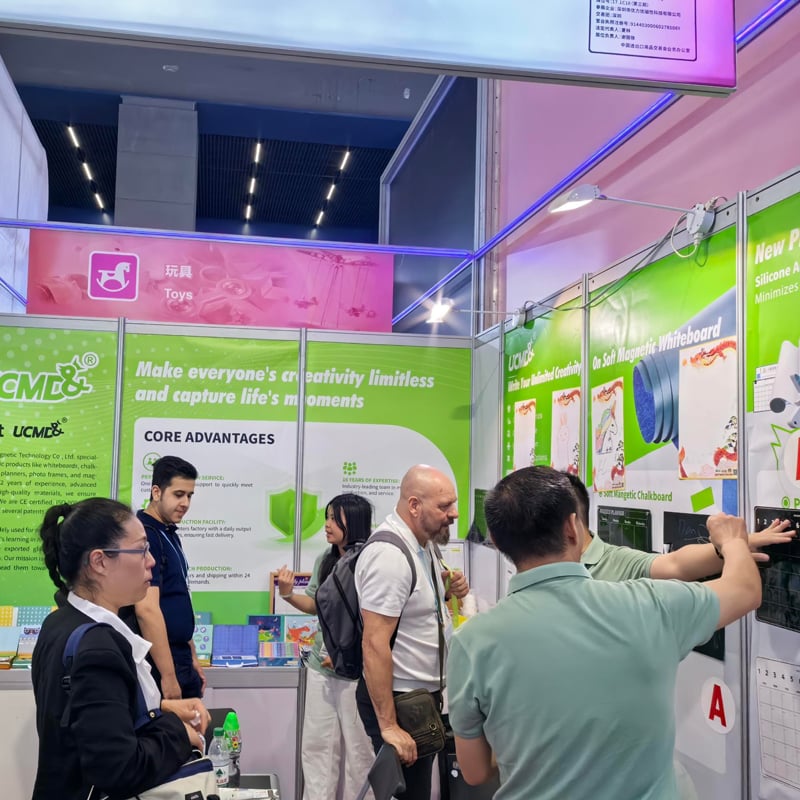
Discover how UCMD® leverages the Canton Fair to showcase magnetic educational & lifestyle products, build global buyer trust, and drive OEM/ODM partnerships. Explore our certified, customizable solutions today.

2026/08/28
Our Commitment to People, Planet & IntegrityAt ShenZhen U&U Magnetic Technology Co., Ltd. (UCMD®), we believe that how we make our products matters as much as what we make. From our factory floor in Shenzhen's Bao An District to the hands...

Please tell us about your company's advantages and characteristics.

Please tell us about your company's advantages and characteristics.

Please tell us about your company's advantages and characteristics.

Please tell us about your company's advantages and characteristics.

Please tell us about your company's advantages and characteristics.

Please tell us about your company's advantages and characteristics.

