 EN

Magnetic Whiteboards for Offices
Please tell us about your company's advantages and characteristics.
2026/10/15
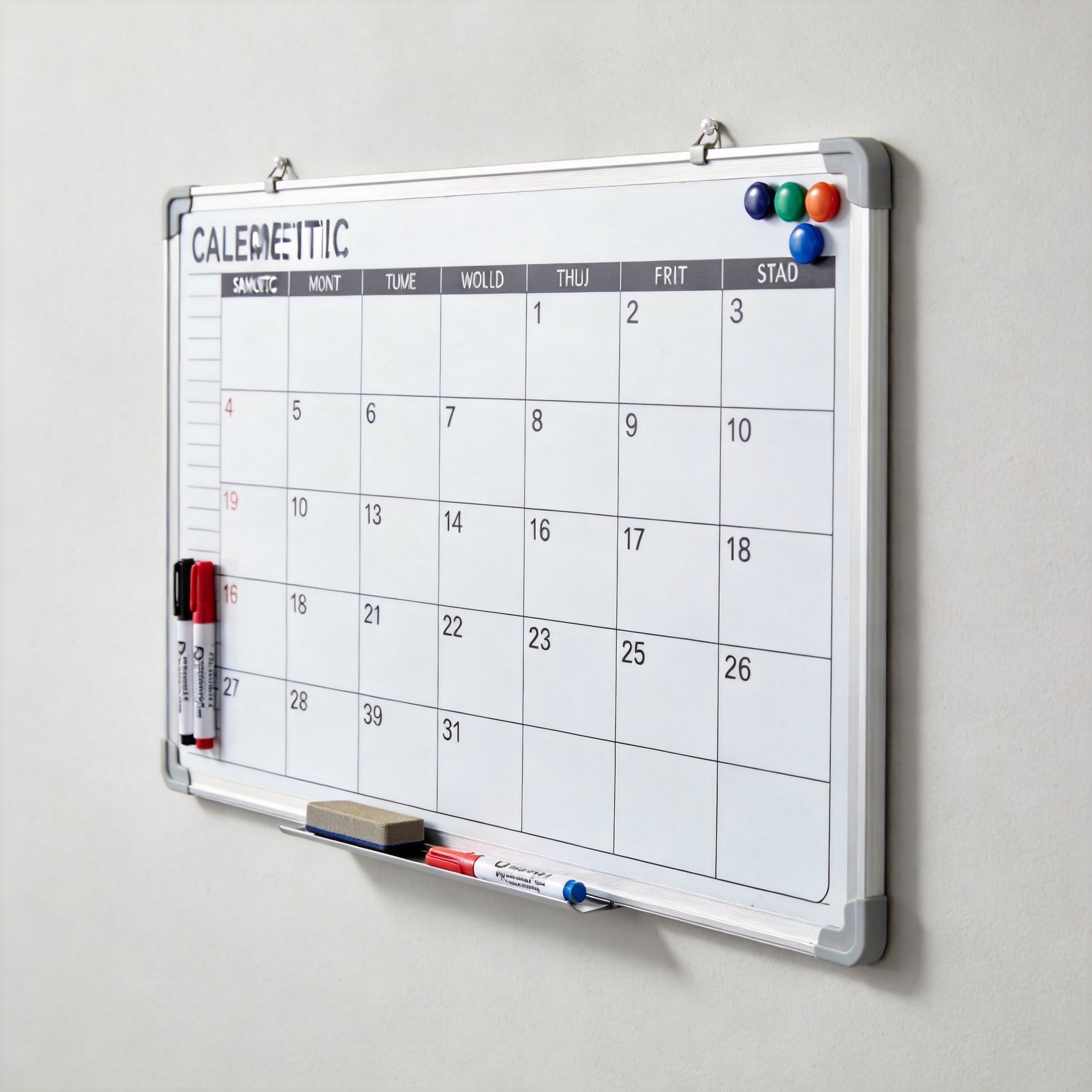
A magnetic whiteboard calendar gives a busy household, office, classroom, or retail team one visible place to plan the month and revise it without starting over. Unlike a paper calendar that becomes cluttered or a plain board with no time structure, the calendar grid supplies a repeatable monthly framework while the dry-erase surface stays flexible. The useful question is not simply “Which magnetic whiteboard calendar fits the routine?” It is which format gives your group enough writing room, stays easy to update, and fits the surface where people will actually look at it.
As a buyer, begin with the planning behavior you want to support. A family may need meal plans, school events, and pickup reminders near the refrigerator. An office may need milestones, deadlines, and owners visible to a whole team. A school or distributor may need consistent formats across several rooms. That use case should determine the size, mounting style, surface quality, and accessories—not the other way around.
The strongest advantage is that a magnetic whiteboard calendar combines two working modes. You can write recurring dates, appointments, deadlines, and notes directly on the board, then use magnets or magnetic labels to move priorities as plans change. This is particularly helpful when a schedule has items that shift from one week to another. Instead of crossing out a calendar cell repeatedly, move a color-coded marker and keep the month readable.
Planning boards are available for daily, weekly, monthly, and longer horizons. For most shared spaces, the monthly view reveals upcoming pressure points without making each day too small to read.
A refrigerator-mounted magnetic whiteboard calendar is convenient because the kitchen already has frequent traffic. It works well for meal plans, school notices, recurring chores, and appointments that several family members need to see. Measure the clear magnetic area first; handles, dispensers, curved doors, and decorative panels can reduce the usable space. Also check that the refrigerator surface is magnetic before you commit to a magnetic format.
For a starting point, review a reusable magnetic fridge calendar with monthly and weekly planning space when you want kitchen scheduling and a compact routine board in the same location. The title confirms the planning format; select the actual dimensions and included components only after reviewing the product details with the supplier.
A wall mounted dry erase calendar is generally a better choice when people need to read the plan from several steps away. It gives every day more writing room and avoids taking over a refrigerator door. Before selecting one, measure the available wall width and height, then account for viewing distance and the typical length of each entry. A larger board is not automatically more useful: if it is too wide for the viewing angle or mounted behind a door, the outer columns may be ignored.
Use a wall format for meeting rooms, staff areas, classrooms, and project spaces. For fixed installation, confirm the wall material and mounting hardware with the supplier or installer.
A jumbo dry erase wall calendar earns its space when multiple people must add information and each day needs more than a short label. Examples include campaign calendars, production schedules, classroom rotations, or multi-team milestone tracking. The extra area can reduce visual congestion, but only if you establish simple rules: one color per category, a limited number of symbols, and a defined place for notes that do not belong in a date cell.
Sketch a typical busy month first. Count the words, names, or deadlines that normally sit in one day, then choose a grid with enough usable cell space. The space inside each date box matters more than overall dimensions.

The calendar only helps if people can read and update it quickly. Choose a dry-erase marker that erases cleanly according to the surface guidance, and avoid leaving dark ink in the same spot for long periods. A soft cloth and the manufacturer-recommended cleaner are usually safer than abrasive cleaners. Keep an eraser and a small supply of working markers within reach; if the tools are stored elsewhere, people are more likely to postpone updates.
Magnetic accessories can add clarity when they have a clear job. Use movable labels for recurring people, departments, or meal categories. Use a small set of color-coded magnets for priorities or status. Avoid giving every event a new color or icon; a calendar becomes harder to scan when its visual language has no limit.
For a simple fridge-centered setup, the magnetic dry-erase whiteboard fridge calendar magnet is a relevant product format to review. For buyers comparing refrigerator calendar options, the product page title can help you identify the category, while final decisions should still rely on confirmed dimensions, materials, and order requirements.
A custom dry erase wall calendar is worth considering when the planning system itself needs to match an established workflow. Teams may need branded headers, a fiscal-month layout, dedicated lanes for departments, room for approval notes, or a combination of monthly and weekly zones. Customization is most valuable when it removes a repeated workaround—not when it adds decorative elements that make the board harder to use.
Before requesting a custom layout, ask users which information they repeatedly squeeze into margins and which fields they actually use. A small pilot can reveal whether the issue is the layout or inconsistent update habits. Confirm feasibility, materials, proofs, and order terms directly before purchase.
Give the calendar an operating routine. At month-end, erase completed entries, transfer recurring items, and add major dates. Assign one person to maintain the base schedule, then use agreed colors or labels for additions. A short weekly review can catch conflicts early.
If you need a refrigerator-oriented monthly planner format, you can also review this magnetic dry-erase calendar whiteboard for a refrigerator. Treat product links as a starting point for category comparison, not a substitute for confirming the specification that fits your own planning space.
A useful magnetic whiteboard calendar puts the right amount of planning detail where people naturally see it and makes updates feel effortless. Choose a refrigerator format for close-range household routines, a wall-mounted format for shared visibility, or a larger board when the month carries dense team information. Then focus on usable cell size, readable surface care, compatible accessories, and a layout that reflects how decisions actually move through the month. When those elements align, the calendar becomes a working planning tool rather than another surface people forget to check.

2026/08/20
Unlock flexible, repositionable whiteboarding for education, agile offices, retail, healthcare & more. Cuttable, magnetic, certified — request your free B2B sample today.

2026/10/10
Discover the 2027 Texture Magnetic Collection & Exclusive Exhibition Promotions Dear Global Partners and Valued Clients, We are thrilled to announce that Shenzhen U&U Magnetic Technology Co., Ltd. (Brand: UCMD) will be officially exhibiting...

2026/08/19
Discover how UCMD® leverages the Canton Fair to showcase magnetic educational & lifestyle products, build global buyer trust, and drive OEM/ODM partnerships. Explore our certified, customizable solutions today.

2026/08/28
Our Commitment to People, Planet & IntegrityAt ShenZhen U&U Magnetic Technology Co., Ltd. (UCMD®), we believe that how we make our products matters as much as what we make. From our factory floor in Shenzhen's Bao An District to the hands...

Please tell us about your company's advantages and characteristics.

Please tell us about your company's advantages and characteristics.

Please tell us about your company's advantages and characteristics.

Please tell us about your company's advantages and characteristics.

Please tell us about your company's advantages and characteristics.

Please tell us about your company's advantages and characteristics.

