 EN

Magnetic Whiteboards for Offices
Please tell us about your company's advantages and characteristics.
2026/10/03
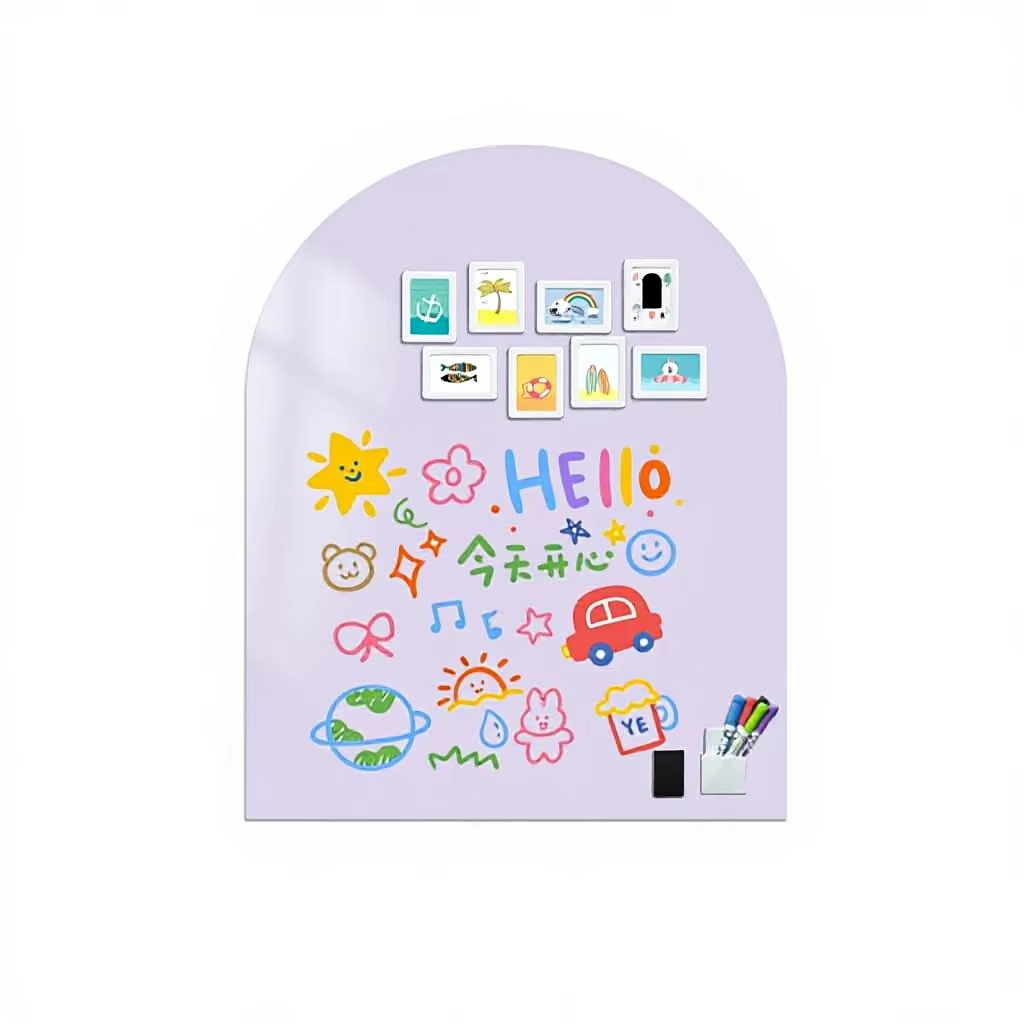
A large dry erase calendar board turns a schedule into something people can see together, update in seconds, and revisit throughout the day. That is its practical advantage over a planner hidden in a bag or a digital reminder visible only on one screen. For a busy family, office team, school, or retail customer, a large dry erase calendar board can make deadlines, appointments, and recurring tasks harder to overlook.
The right choice is not simply the biggest board available. A useful large dry erase calendar board needs enough writing room, a format that matches the planning rhythm, an appropriate mounting surface, and an erasable finish that remains easy to clean. For buyers sourcing for resale or projects, consistent printing, packaging, and customization matter too.
A large dry erase calendar board creates a common visual reference point. Family members can add school events, meal plans, and travel dates; an office can show milestones and coverage; a classroom can display the month at a glance. Unlike a paper calendar, the layout can be reset without replacing the whole product. Unlike a digital calendar, it remains in view without opening an app or enabling notifications.
This does not mean a large dry erase calendar board has to replace digital tools. A sensible workflow is to keep time-sensitive alerts in a shared digital calendar and use the board for the priorities everyone needs to see: the week’s handoffs, deadlines, absences, launches, or household commitments. The physical display is especially helpful when several people need the same information but do not share the same device habits.
In practice, legibility matters more than novelty. A large dry erase calendar board should leave enough room for a person to read a date, write an action, and recognize the distinction between urgent work and routine plans. Color-coded markers or magnetic labels can support that system, but the layout should still work when only one marker is available.
The format of a large dry erase calendar board determines what it does best. A monthly grid is a practical choice for long-range visibility: campaigns, school terms, shift patterns, payment dates, and family events. It helps people spot crowded weeks before they arrive. A weekly planner gives each day more writing room, making it better for appointments, daily priorities, and task ownership.
Many buyers benefit from a hybrid approach. A large dry erase calendar board may combine a month view with a notes column, task list, or weekly section. The choice depends on how detailed the entries are. If each date only needs a few words, a monthly grid is efficient. If every day contains multiple names, times, or deliverables, a weekly format or separate companion planner prevents cramped writing.
For smaller, portable planning needs, buyers can review an A3 Size Dry Erase Calendar for Refrigerator Office Desktop Magnetic Calendar Board Desktop Monthly Planner Sheet. It is a useful example of how a compact calendar format differs from a wall-scale planning display.
When selecting a large dry erase calendar board, start with the wall rather than a catalog label. Measure the clear width and height after allowing for doors, switches, furniture, trim, and mounting hardware. Then consider who will read it and from where. A board placed in a corridor or meeting area needs larger writing and stronger contrast than one read at arm’s length in a home office.
A large white board for wall installation should also be sized around the calendar cells. Thirty-one days divide the usable area quickly. A board that looks generous overall may provide too little daily writing space once the title row, grid lines, and margins are printed. Search results for commercial magnetic calendars show formats from 3 x 4 feet to 4 x 8 feet, with daily-cell areas varying substantially; treat those figures as an illustration of why actual cell dimensions should be confirmed before purchase.
For a big whiteboard for wall project, ask whether one uninterrupted board or several modular boards will work better. One board gives a clean single view. Modular sections can simplify shipping, installation, or seasonal rearrangement. A larger board can be less useful when its far edges are difficult to read or reach; a slightly smaller board at the right height can be more functional.
A magnetic large dry erase calendar board adds a second planning layer. Repositionable labels, task cards, name tags, and reminders can be moved without rewriting the grid. This is helpful in classrooms, offices, and homes where events change often. Before specifying magnets, however, buyers should confirm the board construction and the intended accessory weight.
Do not assume all boards behave the same way. Standard magnetic whiteboard surfaces and glass boards can require different accessories. Magnets for glass whiteboards are typically selected for the thickness and construction of the glass surface; ordinary magnets may not hold reliably. If a product is being sourced as a large dry erase calendar board for a glass-board program, confirm compatible magnets with the supplier rather than making a general assumption from a standard steel-backed board.
For refrigerator or metal-surface planning, a reusable magnetic format can be convenient. The linked Reusable Magnetic Fridge Calendar Monthly & Weekly Planner with Dry Erase Markers for Kitchen Organization and Weekly Planner Magnetic Board Dry Erase Monthly Planner Whiteboard for Fridge show relevant monthly-and-weekly planner categories for buyers comparing compact magnetic formats.
For a retail assortment, a large dry erase calendar board should be grouped by shopper need: home command center, office planning, classroom scheduling, refrigerator planning, or giftable personalized calendar. Make the format clear on packaging. Buyers should request the printable area, overall dimensions, mounting method, included accessories, surface-care guidance, and packaging dimensions rather than relying on a broad “large” description.
For project and wholesale orders, standardization becomes more important. A large dry erase calendar board program may need common grid artwork, uniform mounting holes, consistent edge treatment, and replacement-marker compatibility across multiple locations. Pilot samples are valuable: install one board, let intended users write on it, clean it, and comment on cell size before releasing a larger order.
U&U Magnetic’s available business profile identifies magnetic planners and whiteboards among its product categories and describes OEM/ODM, custom printing, and large or nonstandard size capability. That makes a supplier discussion useful when a buyer needs a private-label large dry erase calendar board, a branded layout, a particular monthly or weekly grid, or a coordinated set of planning products. Final dimensions, materials, artwork feasibility, minimums, and lead times should be confirmed for the specific project.
Care begins with the marker. Use markers intended for dry-erase surfaces, erase recent writing regularly, and test cleaning products on a small unobtrusive area when the surface instructions are unclear. A soft cloth or board-safe eraser is generally preferable to abrasive pads. Leaving dark ink on a large dry erase calendar board for extended periods can make later cleaning more difficult, so establish a monthly reset routine.
For a wall-mounted large dry erase calendar board, periodically check mounting points, corners, and accessories. Keep strong magnets from scraping the writing face, avoid loading the board with more weight than the surface is intended to hold, and store unused markers horizontally with caps secure. These small habits protect readability and preserve the reusable advantage.
Ultimately, the right large dry erase calendar board is one people can read, update, and use without friction. Match the board to the room and the routine, then treat customization and accessories as tools that support a clear planning system rather than features to add by default.

2026/08/20
Unlock flexible, repositionable whiteboarding for education, agile offices, retail, healthcare & more. Cuttable, magnetic, certified — request your free B2B sample today.

2026/10/10
Discover the 2027 Texture Magnetic Collection & Exclusive Exhibition Promotions Dear Global Partners and Valued Clients, We are thrilled to announce that Shenzhen U&U Magnetic Technology Co., Ltd. (Brand: UCMD) will be officially exhibiting...

2026/08/19
Discover how UCMD® leverages the Canton Fair to showcase magnetic educational & lifestyle products, build global buyer trust, and drive OEM/ODM partnerships. Explore our certified, customizable solutions today.

2026/08/28
Our Commitment to People, Planet & IntegrityAt ShenZhen U&U Magnetic Technology Co., Ltd. (UCMD®), we believe that how we make our products matters as much as what we make. From our factory floor in Shenzhen's Bao An District to the hands...

Please tell us about your company's advantages and characteristics.

Please tell us about your company's advantages and characteristics.

Please tell us about your company's advantages and characteristics.

Please tell us about your company's advantages and characteristics.

Please tell us about your company's advantages and characteristics.

Please tell us about your company's advantages and characteristics.

