 EN

Magnetic Whiteboards for Offices
Please tell us about your company's advantages and characteristics.
2026/09/04
A design studio painted one wall with a dry-erase coating to save on boards, then found the room smelled for a week and the finish stained within two months. They peeled it off and applied a whiteboard sticker instead. The sticker went up in an afternoon, moved when they re-laid the room, and erased cleanly. That swap shows why the cheap-looking paint is not always the cheap result, and why a whiteboard sticker deserves a real cost look before the order goes on the wall in a working office with people at desks all day. A whiteboard sticker also erases better than the paint did, which mattered for a client-facing wall.
The sticker price is only part of the bill. Labor, downtime, and how often the surface needs redone decide the real cost of a writing wall in an office or a home that uses it daily for plans, notes, and quick sketches from the team on site.
A whiteboard sticker arrives as a rolled sheet priced by area, with little prep beyond a clean wall. A painted dry-erase wall needs primer, the specialty coat, and often a top clear layer. The whiteboard sticker wins on material simplicity, while the paint builds a stack of cans and steps before the first mark goes down on the surface of the room for the day.
Applying a whiteboard sticker takes two people and a squeegee in under a day, and the room stays usable. A painted wall needs curing time where the space cannot be used, sometimes several days with ventilation. For a working office, that downtime is a hidden cost the whiteboard sticker avoids by going up fast and clean for the team without closing the room. Over five years the whiteboard sticker often needs fewer disruptive visits than paint, because a tired film peels and a fresh whiteboard sticker goes on in an afternoon. The whiteboard sticker avoids the strip-and-recoat mess, and the whiteboard sticker keeps the room working while the change happens on the wall.
The painted option carries risks that the sticker sidesteps, and they show up after the check clears and the team has moved on to other work for the quarter in the busy office space.
Dry-erase paints release solvents while curing, so the room needs ventilation for days. In tight offices this off-gassing disrupts work and worries sensitive staff. A low-VOC whiteboard sticker limits that window, which matters where people sit close to the wall for hours each day in the office with the door shut and the air recirculating.
Many painted walls ghost within weeks, especially under sunny windows. Once stained, the paint cannot be wiped back to new. A quality whiteboard sticker resists staining on its film, so the writing face stays clear and the room keeps a professional look through daily use by the whole team without an early repaint of the wall. The whiteboard sticker avoids this trap, because a quality whiteboard sticker resists staining on its film and the whiteboard sticker erases cleanly with daily care. A whiteboard sticker that stays clear keeps the room professional, and a whiteboard sticker that tires just peels off for a fresh roll without a contractor.
Beyond cost, the sticker fits spaces a painted wall cannot serve without a contractor and a long cure that closes the room for days. Buy it with proof and apply it with care so the whiteboard sticker earns its saving and stays safe for the occupants in the room.
A whiteboard sticker applies to most smooth walls with no primer and no odor. The peel-stick fit means a facilities team handles it without specialists, which keeps the project off the contractor calendar and inside the internal budget for the quarter without surprise fees on the invoice at the end of the job. The whiteboard sticker also sidesteps the limited reuse of paint, because the whiteboard sticker rolls up and follows the room when the layout changes. A whiteboard sticker that moves with the plan protects the first spend, and a whiteboard sticker that peels clean leaves the wall ready for the next tenant who arrives.
Many whiteboard sticker products use a low-VOC adhesive, easing indoor-air worries from day one. Ask the supplier for the declaration, because a low-VOC whiteboard sticker protects occupants during and after install far better than a solvent-heavy paint that lingers in the air for days after the crew leaves the site.
When the room is re-planned, the whiteboard sticker moves with it. The same roll serves a new layout without a new purchase, and the old wall needs no repair. That mobility is the quiet saving few buyers count when they first compare a whiteboard sticker against a painted finish that stays put on the wall after a move.
For coatings, limits such as SCAQMD Rule 1113 cap VOC content in architectural coatings, and Green Seal marks low-emission products. A credible whiteboard sticker supplier provides a declaration; absence of that paper is reason to pause. Buyers who want one wall, one invoice, and one contact often order direct from makers such as U&U Magnetic. Clean the wall, test a corner, apply with a squeegee, erase with a dry cloth, and the whiteboard sticker stays clear for years of daily notes from the team.
Answer: On sticker price the paint looks cheaper, but the whiteboard sticker wins on labor, downtime, and recoat. Paint needs primer, cure days, and stripping when it ghosts. A whiteboard sticker goes up fast, moves with the room, and avoids disruptive recoats, so its lifetime cost often lands lower overall for the office.
Answer: Yes, solvent-based dry-erase paints release VOC while curing and need days of ventilation. A low-VOC whiteboard sticker shortens that window sharply. In a tight office where people sit near the wall, the whiteboard sticker is the kinder choice for indoor air and staff comfort daily through the week at the desk.
Answer: A quality whiteboard sticker resists staining on its film and erases cleanly with daily care. Painted walls often ghost within weeks under sun. If the film ever tires, the whiteboard sticker peels off and a fresh roll goes on, leaving the wall untouched beneath the surface for the next tenant to use.
Answer: Yes. A whiteboard sticker rolls up and re-sticks elsewhere, so the buy follows the room when the layout changes. Paint cannot move and is lost on a vacated wall. That mobility is a saving the whiteboard sticker holds over a permanent painted finish that stays behind after a move to a new space.
Answer: Architectural-coating VOC limits such as SCAQMD Rule 1113 govern products sold in many markets, and Green Seal marks low-emission items. Ask the whiteboard sticker supplier for a declaration. Without that paper, a large order on a busy wall is a real risk to indoor air quality for staff and for daily visitors who sit near the wall. Ask early, before the whiteboard sticker ships, so the buy is protected and the room stays safe for everyone who uses it.
Answer: Clean the wall, test a corner for a day, then apply the whiteboard sticker with a squeegee to push out bubbles. Cut edges with a straight blade and press firmly. Erase with a dry cloth, avoid solvents, and the whiteboard sticker stays clear and useful through years of daily meeting notes on the wall.

2026/08/20
Unlock flexible, repositionable whiteboarding for education, agile offices, retail, healthcare & more. Cuttable, magnetic, certified — request your free B2B sample today.

2026/10/10
Discover the 2027 Texture Magnetic Collection & Exclusive Exhibition Promotions Dear Global Partners and Valued Clients, We are thrilled to announce that Shenzhen U&U Magnetic Technology Co., Ltd. (Brand: UCMD) will be officially exhibiting...
2026/08/19
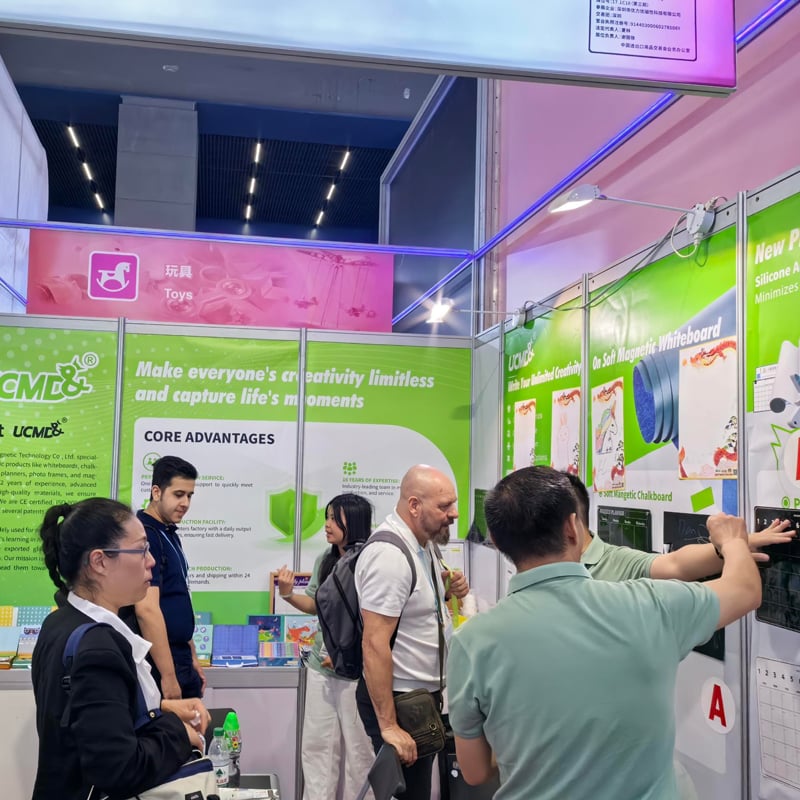
Discover how UCMD® leverages the Canton Fair to showcase magnetic educational & lifestyle products, build global buyer trust, and drive OEM/ODM partnerships. Explore our certified, customizable solutions today.

2026/08/28
Our Commitment to People, Planet & IntegrityAt ShenZhen U&U Magnetic Technology Co., Ltd. (UCMD®), we believe that how we make our products matters as much as what we make. From our factory floor in Shenzhen's Bao An District to the hands...

Please tell us about your company's advantages and characteristics.

Please tell us about your company's advantages and characteristics.

Please tell us about your company's advantages and characteristics.

Please tell us about your company's advantages and characteristics.

Please tell us about your company's advantages and characteristics.

Please tell us about your company's advantages and characteristics.

