 EN

Magnetic Whiteboards for Offices
Please tell us about your company's advantages and characteristics.
2026/09/04
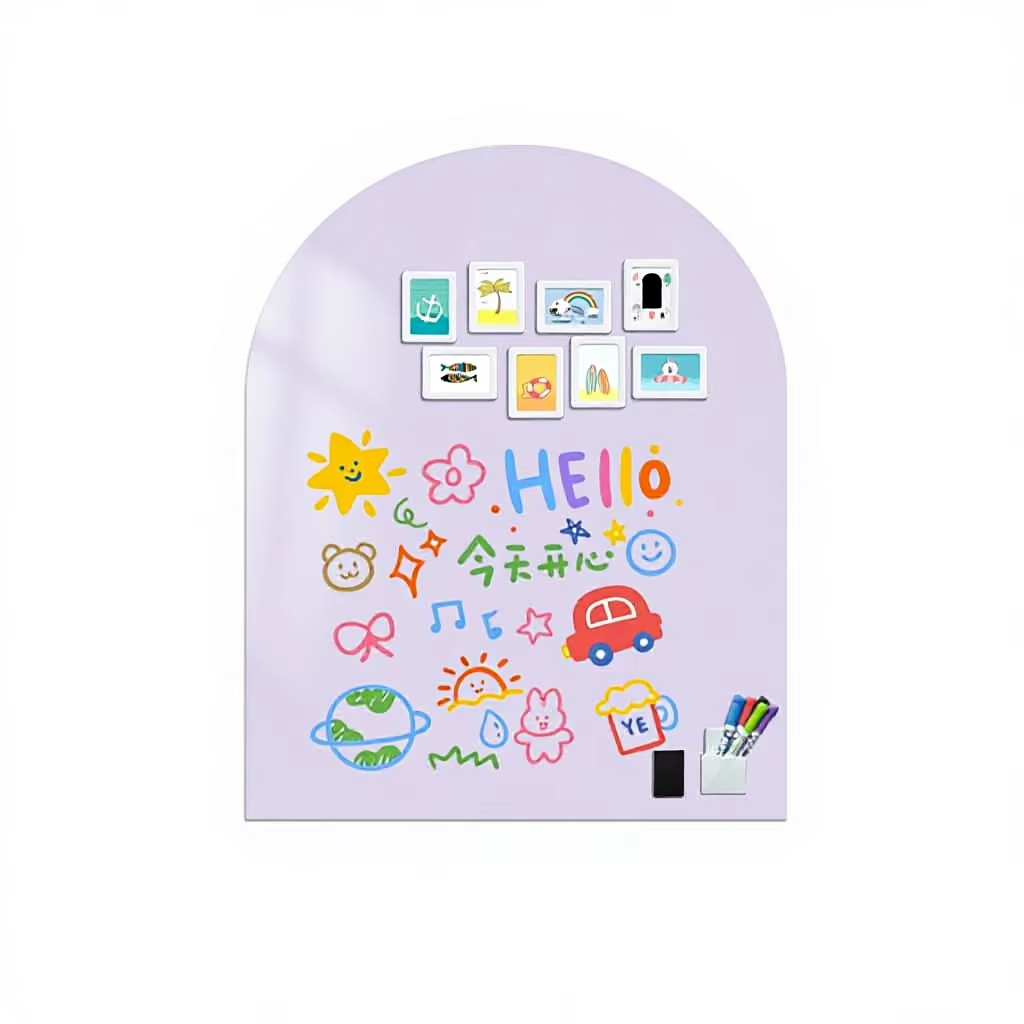
A stationery retailer wanted a private-label flexible whiteboard line for back-to-school and jumped from first quote to mass order in three weeks, skipping a sealed sample. The first container arrived with a writing face that ghosted after a fortnight of demo use in stores, and the logo print sat a few millimeters off center on every carton in the batch. Because no golden sample had been signed, nobody could prove what was agreed, and the whole run had to be discounted through a clearance channel. A flexible whiteboard program runs on paperwork as much as material, and that order skipped both, which is why the process below matters more than the quote. The lesson cost one season of back-to-school sales.
OEM and ODM are not the same commitment, and knowing which one a flexible whiteboard order needs shapes the whole schedule and the contract. OEM means the buyer hands over a complete specification and the factory builds to it. ODM means the supplier contributes the design as well, which is faster but transfers more decisions to the maker of the flexible whiteboard and away from the brand.
In OEM mode, the buyer owns the drawing: size, steel thickness, adhesive grade, print artwork, and packaging for the flexible whiteboard. The factory quotes against that document rather than a catalog. A flexible whiteboard bought this way costs more up front in engineering time but lands exactly as drawn, which suits a brand with fixed retail specifications.
In ODM mode, the supplier proposes the flexible whiteboard build from its catalog and adapts it to the brand's artwork and sizes. This route is quicker and cheaper for a first order, but the buyer should still demand the material declarations and test reports for that flexible whiteboard, because the design ownership sits with the maker and so does the duty of proof.
Artwork and surface finish decide how the flexible whiteboard reads on a retail shelf and how it survives a store demo. A matte face hides glare under bright lighting, while a gloss face wipes cleaner after heavy marker use. Either way, the print colors for the flexible whiteboard should be supplied in CMYK with a physical proof approved before the run, because screen color and print color rarely agree on the first pass. Packaging artwork matters too, since a flexible whiteboard ships rolled and needs a carton that protects the face without adding much weight to the freight bill.
The process fails in predictable places, and each failure is avoidable with a clause or a sample signed before production starts on the flexible whiteboard line at the factory.
Spec drift is the top risk. A flexible whiteboard quoted with a 0.5 mm steel layer ships with 0.4 mm, magnets hold less, and complaints follow within the first month of shelf life. Tie the flexible whiteboard purchase order to the signed golden sample and state that any change needs written approval, so drift has nowhere to hide in the run.
A flexible whiteboard sold into the EU needs REACH declarations for the adhesive and coating, and markets with children's use expect low-VOC proof on file. Ask for these papers at RFQ stage, because a flexible whiteboard that arrives without documents cannot clear customs or pass retail onboarding, whatever its actual quality on the line.
Custom print and special sizes carry tooling, and tooling pushes minimum order quantities up for the flexible whiteboard. A brand that needs two hundred pieces should say so early, because a flexible whiteboard quoted at container volume changes price and lead time at low volume. Honest numbers at RFQ prevent a stalled program later. Where volume is genuinely small, a stock-size flexible whiteboard with a printed overlay or a private-label carton often reaches the same shelf effect without any tooling at all, and that trade is worth asking the supplier about before committing.
A disciplined run takes a few clear steps, and every one of them protects the flexible whiteboard program from the failures above at a fraction of the cost of a failed container.
Communication cadence matters as much as the steps themselves. A weekly update with photos from the line keeps the flexible whiteboard program visible to both sides, and small questions get answered before they become claims. Set that rhythm at kickoff, agree on who signs off at each gate, and the rest of the schedule tends to hold without firefighting later.
Start with a written RFQ that carries the drawing, tolerances, standards, and packing plan for the flexible whiteboard. A factory such as U&U Magnetic that runs both OEM and ODM lines can quote both routes from one RFQ. Shortlist two or three factories, compare their sample boards side by side, and seal one golden sample of the flexible whiteboard with both parties' signatures on the record. That sample becomes the reference for every later shipment of the flexible whiteboard and for any dispute that follows.
During mass production, agree on three inspection points: first-article check, mid-line check, and pre-shipment check on the flexible whiteboard order. Test pull force, thickness, and print position against the golden sample at each stop. A flexible whiteboard checked at these three points ships as ordered, and after-sales claims drop to the rare edge case instead of a pattern.
Answer: OEM means the buyer supplies the full specification and the factory builds the flexible whiteboard to it, while ODM means the supplier designs the product from its catalog and adapts it to the brand. OEM gives control and costs more time; ODM moves faster with fewer buyer decisions on the spec.
Answer: A drawing with size and tolerance, steel thickness, adhesive grade, print artwork, packing plan, and the standards the flexible whiteboard must meet, such as REACH declarations and low-VOC proof. A complete RFQ gets accurate quotes and prevents a flexible whiteboard order from drifting during long production runs at the factory.
Answer: A sealed golden sample ends arguments about what was agreed. Every shipment of the flexible whiteboard is checked against it, so thickness, pull force, and print position all have one reference. Without a golden sample, a flexible whiteboard dispute becomes opinion rather than hard evidence on the table during a claim.
Answer: A REACH declaration for adhesive and coating, low-VOC proof where the market expects it, and any market-specific chemical compliance for the flexible whiteboard. Request these at RFQ stage, because a flexible whiteboard without papers cannot clear customs or pass retail onboarding even when the physical quality is good on arrival.
Answer: Use three: first-article check when the line starts, a mid-line check during the run, and a pre-shipment check on the packed flexible whiteboard order. Testing against the golden sample at each point catches drift early, when a correction still costs hours rather than a full container on the water at sea.
Answer: A simple ODM flexible whiteboard with catalog materials can move from RFQ to shipment in a few weeks, while a full OEM build with custom print and tooling takes longer. Sampling, compliance papers, and sea freight are the main variables in any flexible whiteboard program timeline for a brand.

2026/08/20
Unlock flexible, repositionable whiteboarding for education, agile offices, retail, healthcare & more. Cuttable, magnetic, certified — request your free B2B sample today.

2026/10/10
Discover the 2027 Texture Magnetic Collection & Exclusive Exhibition Promotions Dear Global Partners and Valued Clients, We are thrilled to announce that Shenzhen U&U Magnetic Technology Co., Ltd. (Brand: UCMD) will be officially exhibiting...
2026/08/19
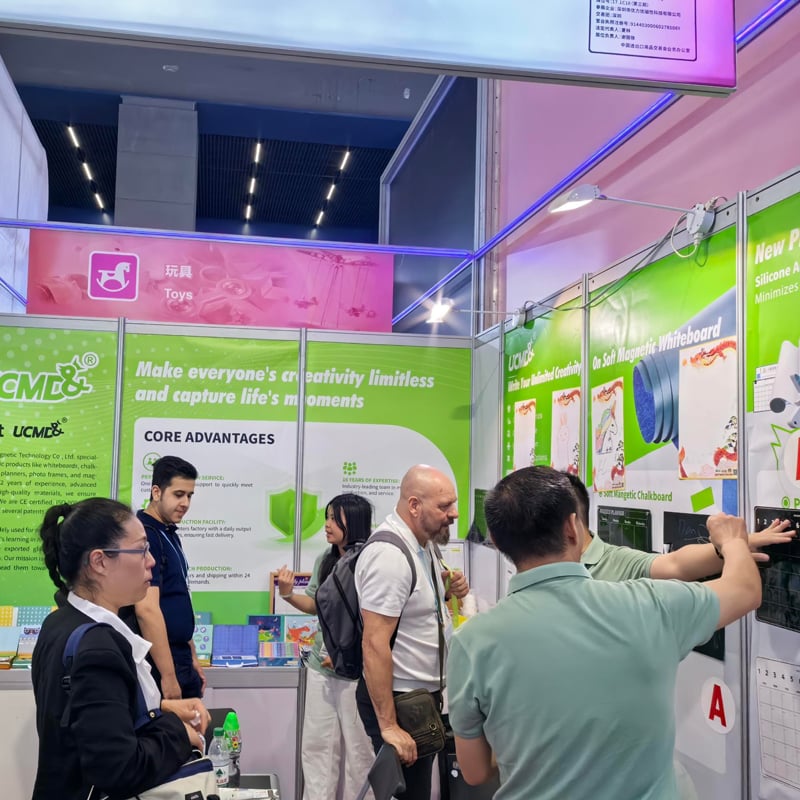
Discover how UCMD® leverages the Canton Fair to showcase magnetic educational & lifestyle products, build global buyer trust, and drive OEM/ODM partnerships. Explore our certified, customizable solutions today.
2026/08/28
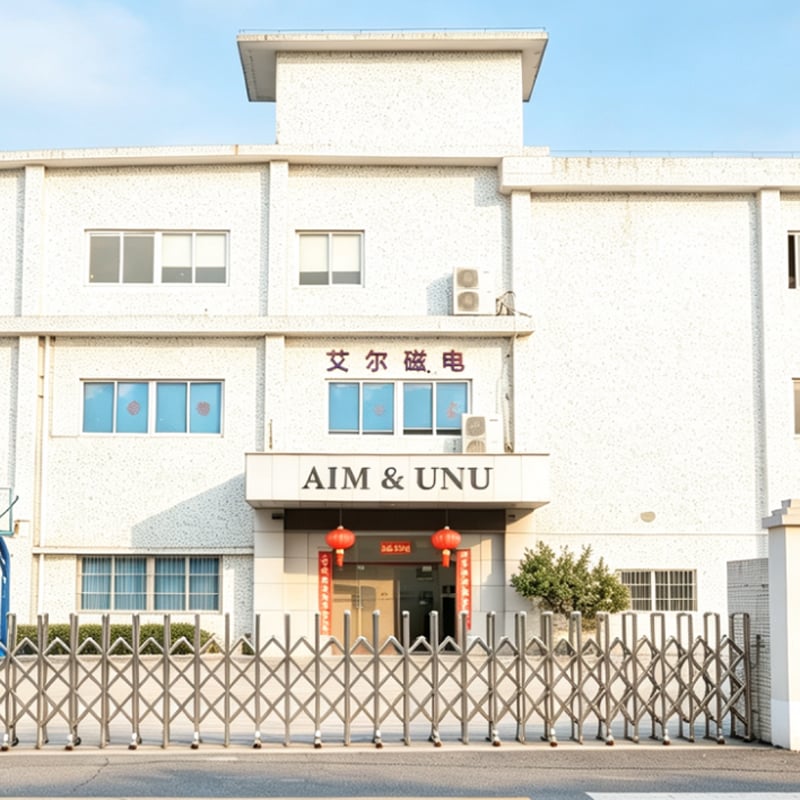
Our Commitment to People, Planet & IntegrityAt ShenZhen U&U Magnetic Technology Co., Ltd. (UCMD®), we believe that how we make our products matters as much as what we make. From our factory floor in Shenzhen's Bao An District to the hands...

Please tell us about your company's advantages and characteristics.

Please tell us about your company's advantages and characteristics.

Please tell us about your company's advantages and characteristics.

Please tell us about your company's advantages and characteristics.

Please tell us about your company's advantages and characteristics.

Please tell us about your company's advantages and characteristics.

