 EN

Magnetic Whiteboards for Offices
Please tell us about your company's advantages and characteristics.
2026/09/30
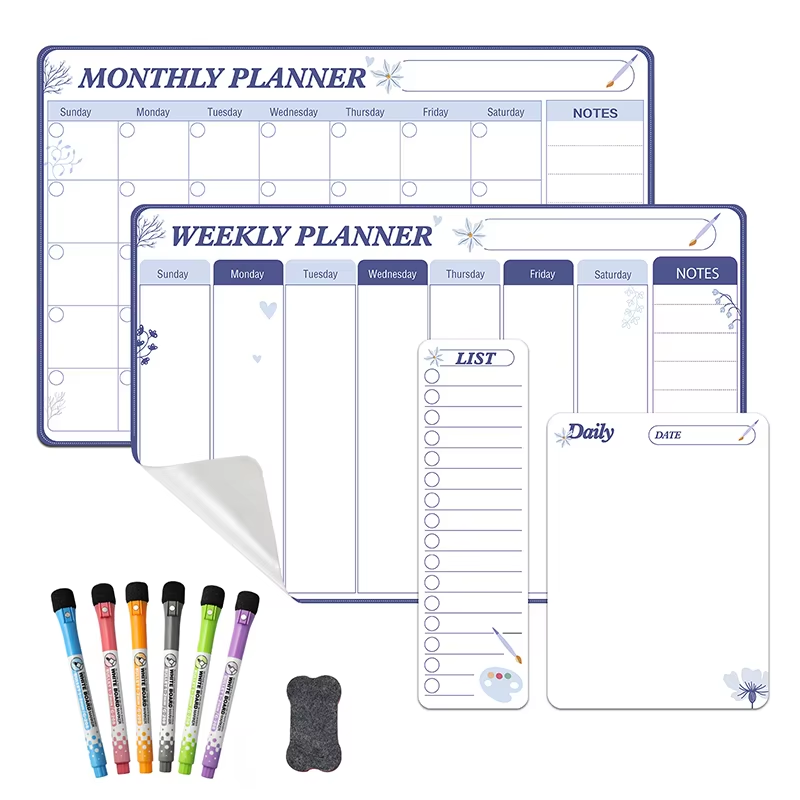
Small dry erase boards make quick thinking visible without asking a room to make space for a full wall board. On a kitchen counter, beside a teacher’s desk, at a reception point, or in a meeting breakout area, they give people a surface for a short list, a sketch, or a changing message. A suitable choice is not necessarily the tiniest board. Select a board whose writing area, mounting method, magnetic function, and surface match the job.
As a magnetic-products technical adviser would frame it, size is only one part of the decision. A board can look appealing on a shelf yet become frustrating when notes overlap, magnets slide, or old ink begins to ghost. This guide helps buyers compare small dry erase boards with larger whiteboard formats, choose an appropriate surface, and ask practical questions before ordering.
Small dry erase boards work well when one person or a small group needs information that changes often. At home, they can hold a weekly menu, a pickup reminder, or a short family task list. In an office, they work well for desk-side priorities, visitor notes, or a compact Kanban view. In classrooms, individual boards let learners answer, practice letters, or show calculations without waiting for a turn at the front board.
Search results for this category commonly show compact examples around 6 × 9, 8.5 × 11, and 12 × 9 inches. Those formats are easy to carry and store, but they are not substitutes for a presentation board. If a team needs several people to read the same schedule from across a room, a larger wall-mounted panel is the more sensible option. Asking one question first helps: who needs to read it, and from how far away?
Magnetic small dry erase boards add another layer of utility. They can hold a note with magnets, attach to a metal surface when designed for that purpose, or support visual planning with color-coded markers and magnetic labels. Buyers should confirm whether “magnetic” means the writing surface accepts magnets, the back adheres to metal, or both; these are different functions.
“Small” is a use-case description, not a universal dimension. A compact lap board and a narrow refrigerator planner may both belong in this category, while a 24x36 whiteboard is generally a room-facing option for a shared schedule or presentation. Likewise, a white board 6x4 and a 4x8 whiteboard are large-format choices, not compact boards. They become relevant when a buyer starts with small dry erase boards but discovers that the information must be visible to a class, department, or production group.
| Need | Better fit | What to check |
|---|---|---|
| Personal reminders or student practice | Small dry erase boards | Portability, rounded edges, easy-clean surface |
| Desk team planning | Compact desktop or narrow wall board | Writing area, stand or mounting, magnet compatibility |
| Shared calendar or classroom display | 24x36 whiteboard or comparable format | Viewing distance, frame strength, wall fixing |
| Large-room presentation | White board 6x4 or 4x8 whiteboard | Wall structure, delivery, installation, long-term surface durability |
It is tempting to assume that a larger board is automatically better. It is not. A large board installed where no one can comfortably reach the top section wastes usable surface. Conversely, small dry erase boards become cluttered when used for a project plan with too many columns. Map the writing content first, then allow margins for headings and changes.
The board face affects erasability, resistance to ghosting, weight, and expected service conditions. Painted steel or coated steel surfaces are commonly considered for light-to-moderate use; consistent cleaning matters because residue can accumulate. Porcelain enamel on steel is often selected for high-frequency settings where durability and resistance to ghosting matter. Glass offers a non-porous writing surface and a contemporary look, but it can cost more and requires careful consideration of mounting and weight.
For small dry erase boards used occasionally at home or as student response boards, a practical coated surface may be sufficient when it is cleaned routinely. For reception, training, or classroom use throughout the day, buyers should ask for the surface construction, backing, frame, and recommended cleaning method rather than judging only by a product photo. First impressions often focus on the frame color; daily satisfaction usually depends on how cleanly the surface erases.
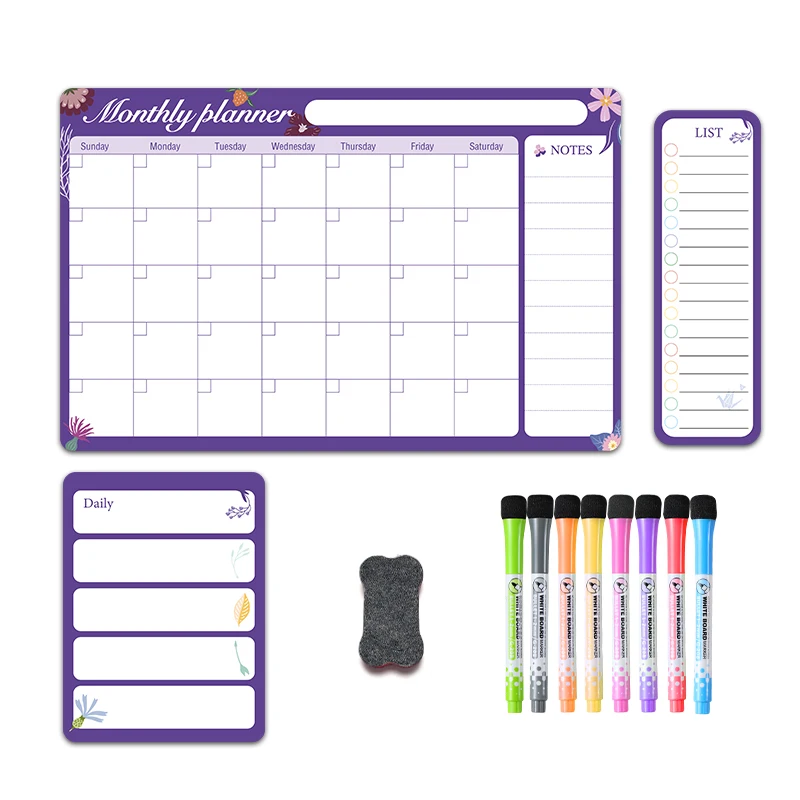
For an institutional order, request a sample or inspect a representative unit before confirming a full run. Test the board with the magnets and paper stacks that users actually plan to display. A weak magnetic response may only become obvious after several sheets are layered together. Also check flatness, edge finishing, backing rigidity, mounting hardware, packaging, and the consistency of dimensions across units.
Customization can be valuable when small dry erase boards need a branded header, printed grid, calendar layout, custom frame, or specified size. Buyers sourcing at scale can review customizable magnetic drywipe whiteboard options alongside a clear artwork brief and approval sample. For organization-wide display needs, a magnetic culture wall whiteboard illustrates a distinct, larger-format application. These links identify available product records; buyers should confirm final specifications and fit directly with the supplier.
Use markers intended for dry erase surfaces, erase fresh writing regularly, and wipe with a soft dry cloth or a board-safe cleaner as appropriate. Avoid abrasive pads and harsh solvents unless the surface supplier explicitly recommends them. When ghosting starts, clean the board before assuming the surface has failed. Keeping an eraser clean matters too: a dirty eraser can redistribute ink residue across small dry erase boards.
For a magnetic refrigerator planner or similar compact board, avoid overloading it with thick stacks of paper. For wall-mounted boards, periodically check fasteners and frame alignment. These basic habits help the board remain clear, flat, and ready for the next message.
Small dry erase boards are a strong fit for personal planning, student participation, quick office coordination, and changeable home messages. Choose a compact size when the reader stands close and the content is brief. Move to a 24x36 whiteboard, white board 6x4, or 4x8 whiteboard when the audience, viewing distance, or amount of information grows. By comparing the real task, surface construction, magnetic requirement, and installation conditions, buyers can select a board that works well beyond the first week of use.

2026/08/20
Unlock flexible, repositionable whiteboarding for education, agile offices, retail, healthcare & more. Cuttable, magnetic, certified — request your free B2B sample today.

2026/10/10
Discover the 2027 Texture Magnetic Collection & Exclusive Exhibition Promotions Dear Global Partners and Valued Clients, We are thrilled to announce that Shenzhen U&U Magnetic Technology Co., Ltd. (Brand: UCMD) will be officially exhibiting...

2026/08/19
Discover how UCMD® leverages the Canton Fair to showcase magnetic educational & lifestyle products, build global buyer trust, and drive OEM/ODM partnerships. Explore our certified, customizable solutions today.

2026/08/28
Our Commitment to People, Planet & IntegrityAt ShenZhen U&U Magnetic Technology Co., Ltd. (UCMD®), we believe that how we make our products matters as much as what we make. From our factory floor in Shenzhen's Bao An District to the hands...

Please tell us about your company's advantages and characteristics.

Please tell us about your company's advantages and characteristics.

Please tell us about your company's advantages and characteristics.

Please tell us about your company's advantages and characteristics.

Please tell us about your company's advantages and characteristics.

Please tell us about your company's advantages and characteristics.

