 EN

Magnetic Whiteboards for Offices
Please tell us about your company's advantages and characteristics.
2026/10/19
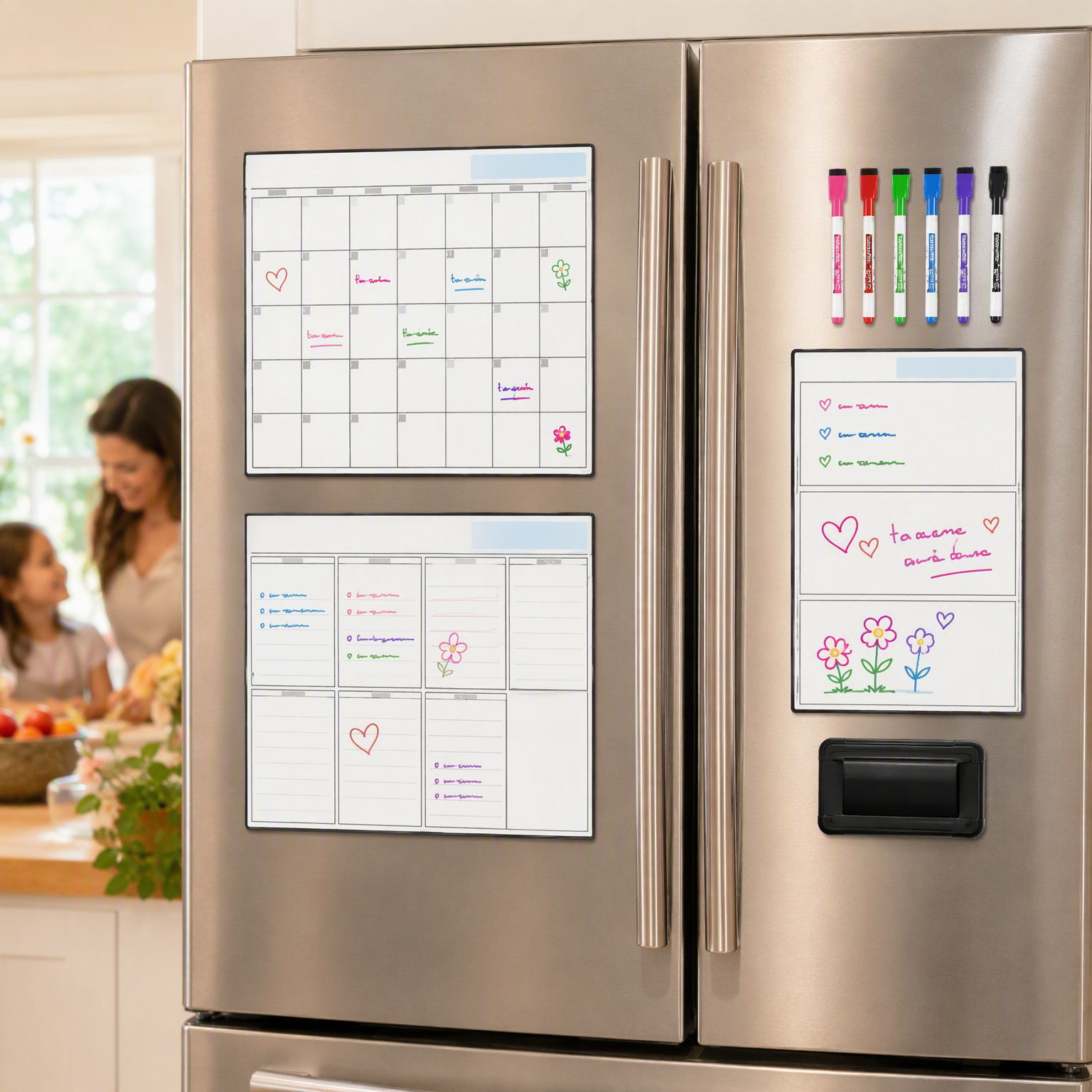
In my years managing cross-functional product development and operations teams, I have repeatedly observed a common issue with purely digital management software: critical milestones often get buried beneath browser tabs and unread notifications. Digital project management suites excel at detailed task logging, but they frequently fail to build daily alignment across department members. During a major cross-departmental product launch last year, our team struggled with misalignment on sprint deadlines, leading to costly scope creep and last-minute delays. The solution that restored clarity was surprisingly low-tech: installing a high-visibility large dry erase calendar in our central war room.
By taking key deadlines out of isolated digital applications and placing them on a shared wall, our morning standups transformed from passive status reporting into proactive, problem-solving discussions. Team members could immediately spot bottlenecks, evaluate capacity conflicts, and align their weekly schedules without searching through complex software menus. Choosing a physical monthly calendar schedule maker provided our team with an unshakeable single source of truth. The tactile experience of physically writing out milestones and wiping away completed deliverables gave team members a sense of ownership that digital cards simply could not replicate. When combined with our digital tools, the physical board served as an unmissable anchor for daily focus and accountability.
From a workflow engineering perspective, project visibility relies heavily on visual ergonomics and cognitive load reduction. Human visual processing responds far more effectively to spatial layout and color grouping than to dense digital text lists. When choosing an effective monthly planner white board, engineering and project planning teams must evaluate surface clarity, frame rigidity, ghost resistance, and grid layout precision. Premium visual boards utilize high-grade magnetic dry-erase surfaces designed to resist marker staining, shadow marks, and chemical degradation caused by frequent erasing.
In active agile environments, a white board monthly planner acts as an intuitive visual radiator—a display that delivers vital project information continuously without requiring user authentication, login credentials, or active searching. Structuring your physical project planning board requires deliberate organization. Establishing designated swimming lanes for concurrent sub-projects, assigning dedicated dry-erase marker colors to specific departments, and preserving margin space for urgent blockers ensures that complex project data remains clear and actionable. Implementing a large dry erase calendar ensures that dates, owner initials, and task status codes are readable from across a conference room, allowing team leaders to assess project health in seconds during fast-paced reviews.
Leading organizational behavior researchers and project management authorities continuously emphasize the psychological benefits of physical visual management tools in collaborative environments. Studies published in corporate management literature highlight that tactile visual systems significantly improve memory retention, team cohesion, and task tracking across multi-disciplinary teams. When team members physically write down deliverables on a large dry erase calendar, neural pathways associated with recall and task commitment are activated far more strongly than when typing into a spreadsheet or web dashboard.
Industry benchmarks for effective workspace design show that teams utilizing hybrid tracking—combining digital task repositories with a high-visibility monthly calendar schedule maker—experience fewer miscommunications and faster sprint transitions. Organizational agile frameworks regularly integrate physical wall boards to facilitate daily standup meetings, planning retrospectives, and resource capacity evaluations. Providing a durable, high-contrast monthly planner white board in shared workspaces establishes an open culture of transparent tracking, ensuring that every project participant, stakeholder, and executive guest understands current operational priorities without needing complex software training or access permissions.
Building trust in team-level hardware requires absolute reliability, structural durability, and thoughtful functional design. At UNU, we understand that a professional white board monthly planner serves as the central hub of daily business operations. UNU designs high-performance visual planning products tailored specifically to corporate offices, manufacturing management hubs, design studios, and educational facilities. Every UNU large dry erase calendar is manufactured with meticulous precision, utilizing warp-resistant backing materials, heavy-duty aluminum framing, and smooth, high-contrast writing surfaces built to withstand rigorous daily corporate use.
UNU prioritizes utility and user safety across all product lines. Our dry-erase surfaces feature specialized anti-glare coatings that maximize legibility under bright office lighting, while magnetic backing layers allow teams to easily attach project notes, color-coded status badges, and critical documentation directly onto the schedule grid. By delivering durable construction and clean aesthetic framing, UNU provides organizations with reliable visual management tools that maintain pristine condition through years of continuous planning cycles. Investing in a UNU monthly calendar white board equips your workforce with an enduring platform engineered to support seamless collaboration, transparent milestone tracking, and consistent operational efficiency.
Successfully integrating a large dry erase calendar into your team's workflow requires an intentional deployment strategy rather than simply mounting a board on a wall. Begin by positioning your UNU monthly calendar schedule maker in a prominent, high-traffic area where team members naturally gather, such as a main conference space, agile project room, or shared department hallway. Assign clear operational guidelines: define distinct marker colors for different project tiers, set a mandatory rule that every entry must feature an owner's initials, and establish a weekly or monthly routine for updating the grid.
To maximize long-term utility, pair your physical UNU monthly planner white board directly with your established digital management stack. Use digital tools for detailed technical documentation, file storage, and granular sub-task ticketing, while reserving your UNU white board monthly planner for critical path milestones, client delivery dates, and cross-department dependencies. Regular maintenance is equally important; clean your UNU monthly calendar white board using soft micro-fiber cloths and approved board cleaners to preserve surface brilliance and prevent ink build-up over time. By following these clear operational practices, organizations can transform simple wall space into a high-impact hub for team productivity, strategic alignment, and operational success.

2026/08/20
Unlock flexible, repositionable whiteboarding for education, agile offices, retail, healthcare & more. Cuttable, magnetic, certified — request your free B2B sample today.

2026/10/10
Discover the 2027 Texture Magnetic Collection & Exclusive Exhibition Promotions Dear Global Partners and Valued Clients, We are thrilled to announce that Shenzhen U&U Magnetic Technology Co., Ltd. (Brand: UCMD) will be officially exhibiting...
2026/08/19
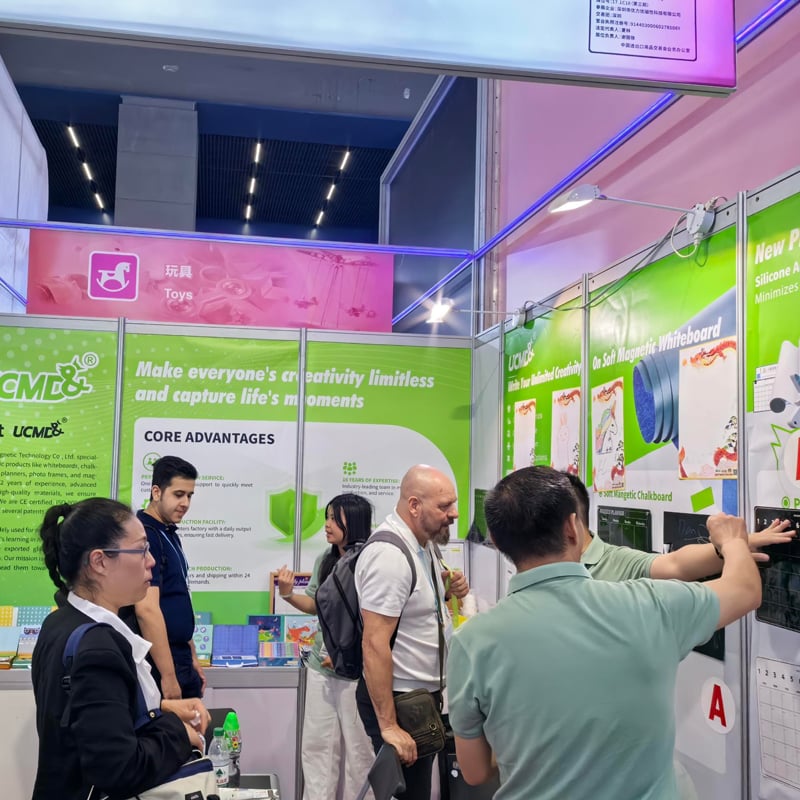
Discover how UCMD® leverages the Canton Fair to showcase magnetic educational & lifestyle products, build global buyer trust, and drive OEM/ODM partnerships. Explore our certified, customizable solutions today.

2026/08/28
Our Commitment to People, Planet & IntegrityAt ShenZhen U&U Magnetic Technology Co., Ltd. (UCMD®), we believe that how we make our products matters as much as what we make. From our factory floor in Shenzhen's Bao An District to the hands...

Please tell us about your company's advantages and characteristics.

Please tell us about your company's advantages and characteristics.

Please tell us about your company's advantages and characteristics.

Please tell us about your company's advantages and characteristics.

Please tell us about your company's advantages and characteristics.

Please tell us about your company's advantages and characteristics.

