 EN

Magnetic Whiteboards for Offices
Please tell us about your company's advantages and characteristics.
2026/09/12

Operating a modern cold-chain warehouse presents a unique set of logistical and material challenges that can severely test the durability of standard facility identification systems. When facility managers oversee environments where temperatures plummet to negative twenty degrees Celsius or lower, traditional paper or cheap plastic labels often fail rapidly due to moisture accumulation, frost formation, and thermal contraction. In these demanding conditions, items like industrial magnetic tags and specialized solutions engineered by UNU provide a reliable alternative that mitigates frequent label replacement costs. Warehouse personnel frequently report that conventional stickers become brittle, lose their adhesive bond, and fall off metal racking systems within days of application in a sub-zero environment. This loss of identification leads to costly picking errors, inventory discrepancies, and operational delays that ripple through the entire supply chain network. Understanding how extreme cold environments impact labeling materials is the first step toward implementing a robust identification strategy, making it essential to choose hardware designed specifically for sub-zero thermal fluctuations rather than standard ambient warehouse settings where normal adhesives might otherwise suffice.
At the core of reliable sub-zero metal labeling is the unique material science behind a high-grade rubber magnet. Unlike rigid ferrite or neodymium magnets that can easily become brittle and fracture under severe thermal shock, flexible rubber magnet variants retain their elastomeric properties even in freezing warehouse temperatures. This physical flexibility allows the magnetic sheet to absorb minor mechanical impacts from forklifts, hand trucks, or stock handlers without shattering, ensuring continuous and secure attachment to steel shelving uprights and freezer storage bins. UNU engineers utilize balanced magnetic formulas that maintain consistent magnetic flux density despite the biting cold, preventing the tags from sliding or detaching when heavy frost builds up on the metal surface. Furthermore, the inherent structure of a rubber magnet resists moisture absorption, preventing water from freezing inside the material matrix and causing internal structural degradation over time. By leveraging these specialized magnetic characteristics, facility operators can ensure that their identification hardware remains firmly in place regardless of the frost cycles, humidity shifts, and heavy daily usage typical of active cold-chain distribution centers.
Efficiency in modern cold-chain logistics relies heavily on the speed and accuracy of inventory rotation, which is why deploying industrial magnetic tags has become a standard best practice for forward-thinking facilities. In environments where stock locations change frequently due to seasonal demand fluctuations or shifting product lines, permanent adhesive labels create a messy cleanup nightmare involving scraping, chemical residue removal, and re-application. In contrast, industrial magnetic tags can be instantly repositioned, removed, or swapped out without damaging the underlying racking surface or leaving sticky residues that trap dirt and frost. UNU designs these tags to provide optimal holding power—strong enough to resist the draft from rapid-chill cooling fans and automated guided vehicles, yet easy enough for gloved warehouse workers to move manually during routine inventory audits. This operational flexibility significantly reduces downtime during layout reorganizations, allowing staff to focus entirely on order fulfillment rather than tedious maintenance tasks. The capability to relocate identification markers effortlessly translates into tangible labor savings and a much more agile warehouse management workflow across all freezer zones.
Transitioning from standard stickers to cold-warehouse labeling solutions requires a clear understanding of why traditional adhesive technologies fail in sub-zero environments. Standard pressure-sensitive adhesives rely on liquid flow to wet out the substrate surface and form a proper bond, but freezing temperatures cause these adhesives to crystallize, lose tack, and fail completely upon initial contact. While some manufacturers offer alternative freezer-safe labels with specialized low-temperature adhesives, these options often require meticulous surface cleaning and warm application conditions that are nearly impossible to maintain inside an active freezer. Magnetic solutions bypass the chemical bonding limitations of adhesives entirely by relying on physical magnetic attraction, which is unaffected by low temperatures. UNU provides clear guidance on how magnetic tags perform differently than adhesive counterparts, emphasizing that mechanical or magnetic gripping mechanisms provide a superior, maintenance-free lifespan in cold storage. This technical distinction helps warehouse managers avoid the recurring expenses and operational headaches associated with continuously reapplying fallen or ruined adhesive tags under freezing conditions.
To maximize the lifespan and effectiveness of magnetic identification systems in cold-chain facilities, implementing a few straightforward operational best practices is essential. Before applying any magnetic tags to freezer shelving, maintenance teams should ensure that the target metal surface is wiped free of heavy ice buildup, loose rust, and heavy debris, which can create microscopic air gaps and reduce magnetic pull strength. Although UNU products are engineered to tolerate moisture and frost, starting with a clean surface guarantees maximum initial contact and long-term stability. Additionally, facility managers should train warehouse staff on proper handling procedures, such as sliding magnetic tags horizontally rather than prying them away aggressively from the edge, which preserves the magnetic strip integrity over years of service. By combining high-quality materials from UNU with proper installation and maintenance protocols, cold-chain operators can achieve a seamless, highly durable identification network that withstands the most punishing freezer environments without compromising performance, efficiency, or safety.

2026/08/20
Unlock flexible, repositionable whiteboarding for education, agile offices, retail, healthcare & more. Cuttable, magnetic, certified — request your free B2B sample today.

2026/10/10
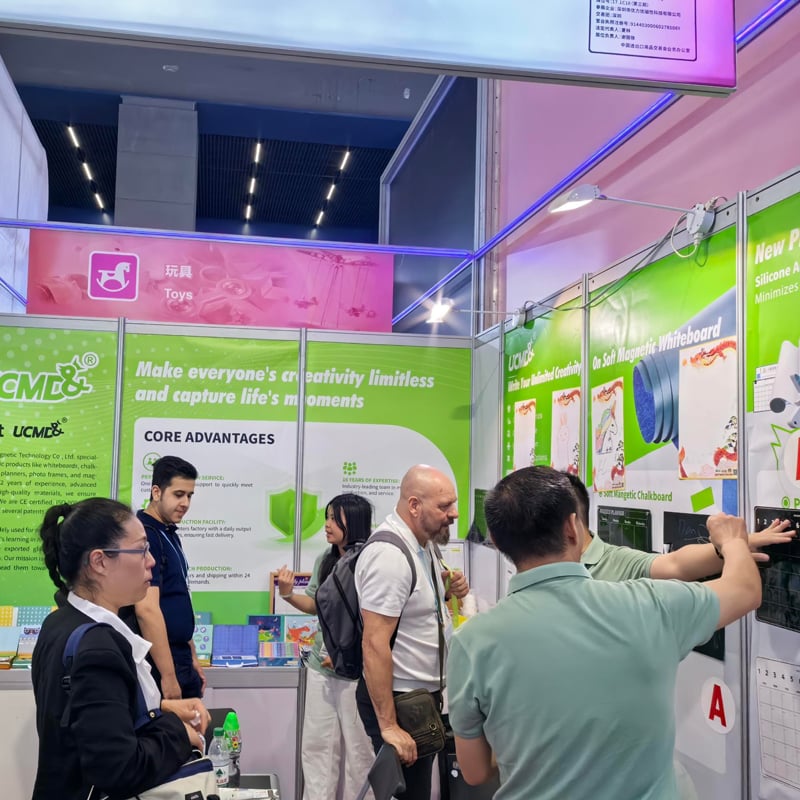
Discover the 2027 Texture Magnetic Collection & Exclusive Exhibition Promotions Dear Global Partners and Valued Clients, We are thrilled to announce that Shenzhen U&U Magnetic Technology Co., Ltd. (Brand: UCMD) will be officially exhibiting...
2026/08/19
Discover how UCMD® leverages the Canton Fair to showcase magnetic educational & lifestyle products, build global buyer trust, and drive OEM/ODM partnerships. Explore our certified, customizable solutions today.

2026/08/28
Our Commitment to People, Planet & IntegrityAt ShenZhen U&U Magnetic Technology Co., Ltd. (UCMD®), we believe that how we make our products matters as much as what we make. From our factory floor in Shenzhen's Bao An District to the hands...

Please tell us about your company's advantages and characteristics.

Please tell us about your company's advantages and characteristics.

Please tell us about your company's advantages and characteristics.

Please tell us about your company's advantages and characteristics.

Please tell us about your company's advantages and characteristics.

Please tell us about your company's advantages and characteristics.

